By Ollie Juggins
22nd October 2025
We make no apologies: this is a long post. This car deserves it though.
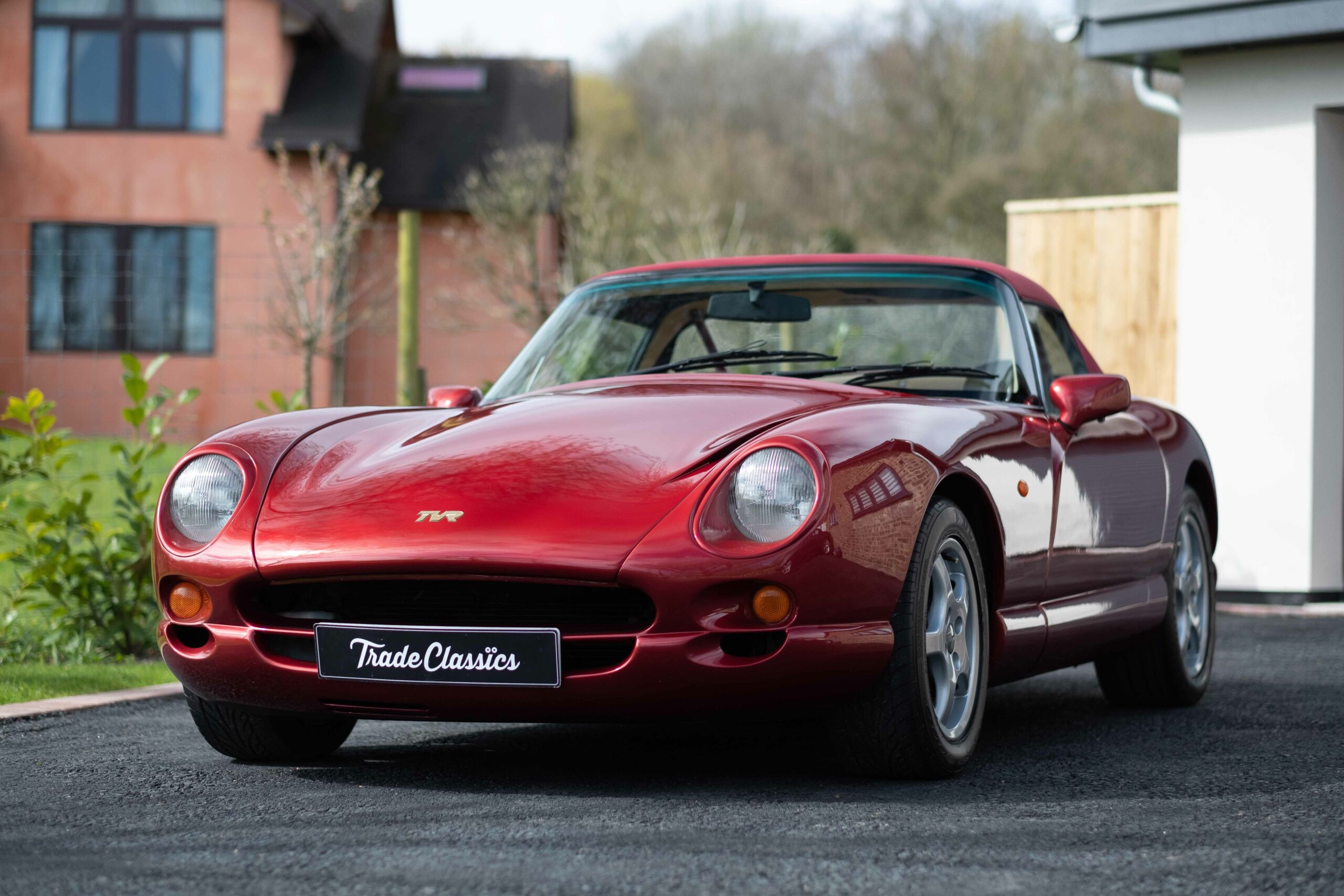
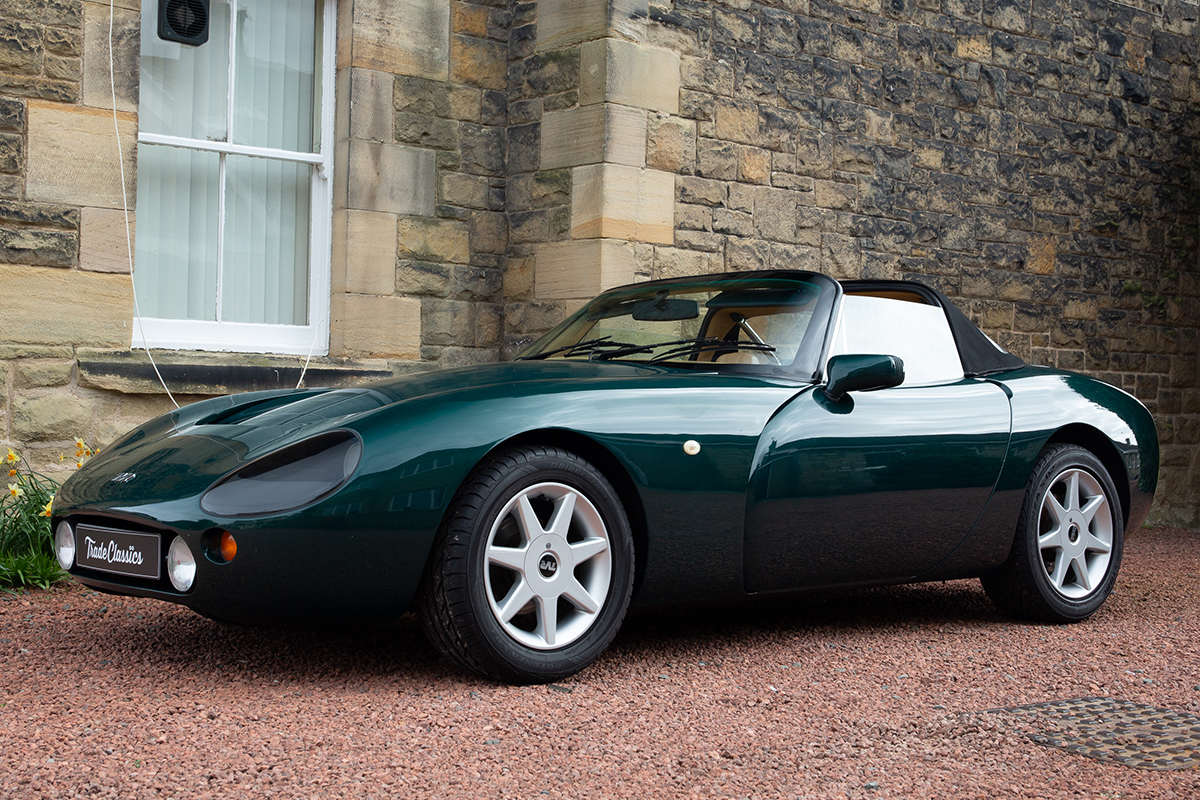
Even in the rarefied and outrageous world of TVR, there is nothing else quite like a Tuscan. Certainly, you could point at the Sagaris, which, as a famously bombastic motoring journalist once noted “appears to have been designed by a lunatic, and then hit with an axe” – but without those bizarre wing dents and with a squint, it would look very much like any other sports car.
You could point to the wedges, but they are very much of their time, and only look weird with hindsight. TVR was far from the only manufacturer creating triangular vehicles, with TVR, Aston Martin, and even Ferrari getting in on the trend. Wedges were part of a crowd, a movement, even.
Not so the Tuscan. It’s so thoroughly weird, so unlike anything that precedes or follows it, that it’s impossible not to draw comparisons with Sgt. Peppers Lonely Hearts Club or the invention of the spork.
Exploding into the automotive world at the UK Motor Show in 1998, the Tuscan was an immediate hit – TVR took 1,500 deposits. Rather than doing what any sensible low volume manufacturer would have done – buy in a nice American V8 – TVR persisted with its home-grown straight six engine (the “Speed Six”, or “AJP-6”).
It’s fast. Very fast. The Mk1 was offered in either 3.6 or 4.0 litre guise, putting out 350bhp and 360bhp respectively; for those with an aversion to a clean license there was also the now-coveted 4.0 Red Rose, which eked out 380bhp from the 4-litre block. All three versions offered around 300 (+/-10) lb ft of torque. This, in a fibreglass car weighing a very svelte 1,100kgs, feels astounding.
It also sounds outrageous, with twin carbon fibre exhaust pipes sticking out of the back, just far enough that I, and others, have ended up with burned shins on more than one occasion.
It’s hard to pin down 0-60 times as (i) there appear to be many takes on this, and (ii) virtually no TVR ever left the factory with the claimed level of power. Some appear to be relatively ‘hot’ and others ‘cold’ – though all are undeniably cool. It’s comfortably below 5 seconds though, and probably in the low 4s.
But the crazy numbers go further than just outright speed. For example, the steering is very sharp, requiring only 1.7 turns lock to lock on the mk1 – although this was raised to a hardly-more-sensible 2 turns for the mk2. For context, BMW’s contemporary E46 M3 – one of the all-time great drivers’ cars, about which nobody has said “the steering is too vague” – took 3.0 turns to get the wheels from full lock one way to full lock the other. Another crazy number that pops up regularly is 0: this time in relation to safety features. This car has no ABS, no traction control, and there are no airbags. Just drive it well enough not to crash, I suppose.
Perhaps because of these quirks (not to mention its emissions profile!), the car was never type approved for US markets – much to the annoyance of anyone over the pond who had watched John Travolta get shot at in his (unrealistically bulletproof) Chameleon Blue Mk1 in Swordfish.
However, there’s a change on the horizon. Cars are eligible for import into the US on their 25th birthday: including cars that weren’t originally sold there. With the earliest Tuscans have now reached that milestone, and the rest aren’t far behind. This will place an upwards pressure on their values and has already led to increased interest.
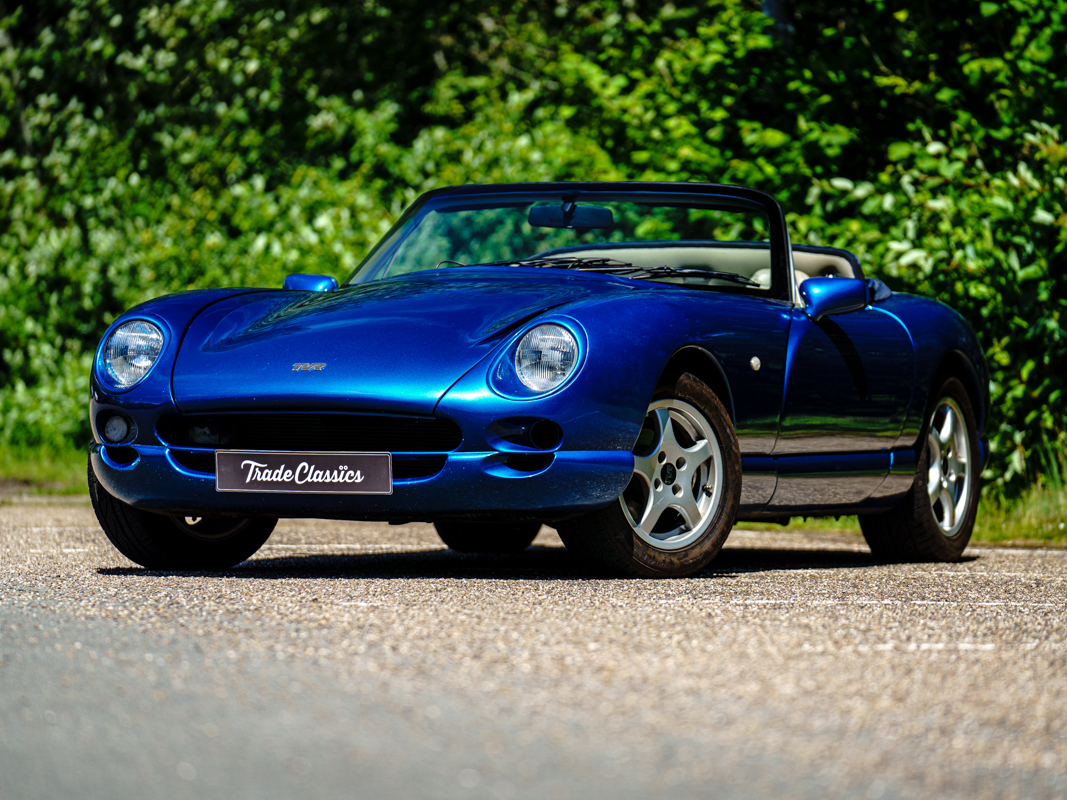
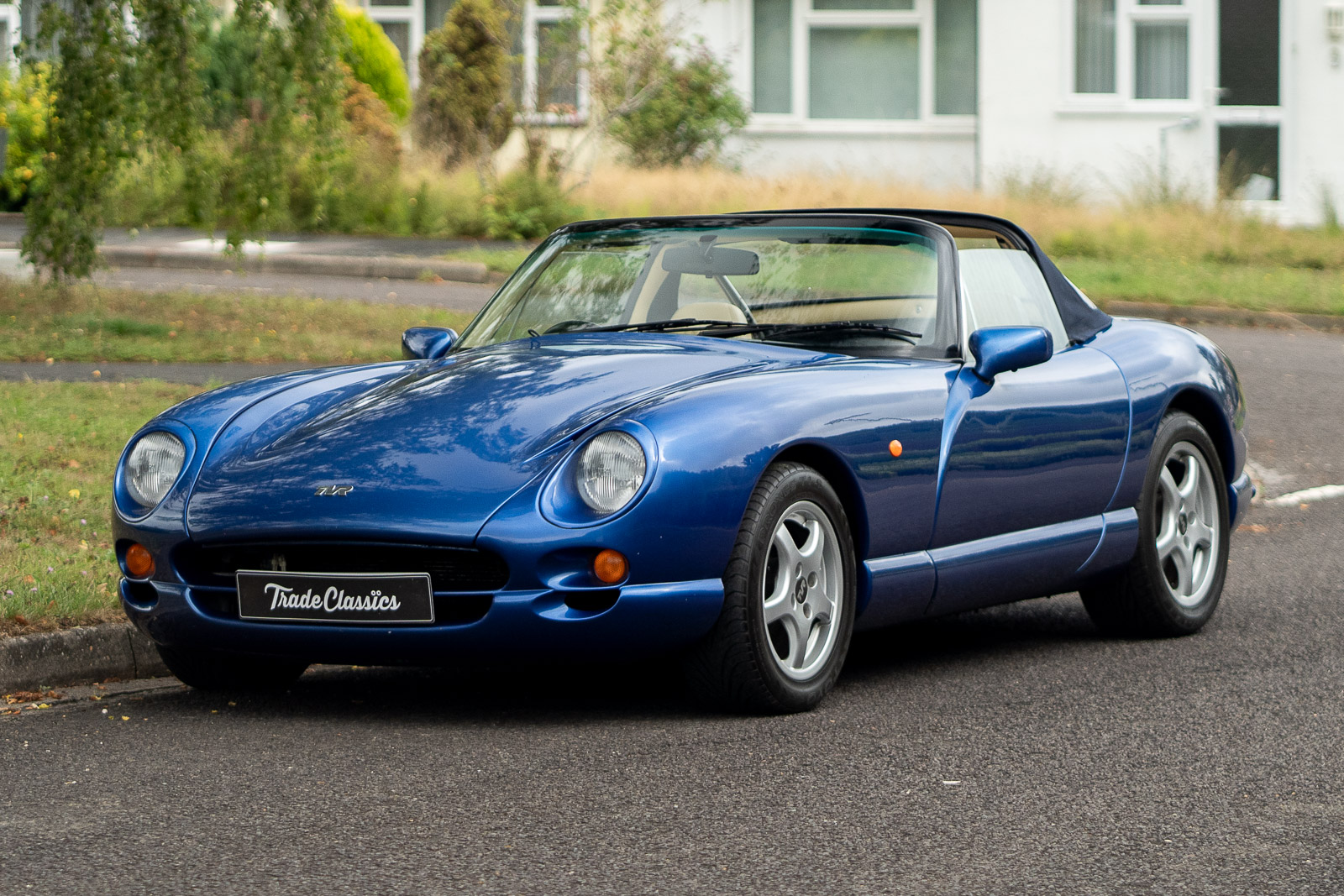
We recently sold this gorgeous 2002 Lapis Blue Tuscan 3.6 for £25,656 – as far as we’re aware, the highest price achieved for a 3.6, and getting towards the highest auction price we can find for a non-S Mk1 at all.
Conventional wisdom had it that “TVRs don’t auction well” – we can now put that myth to bed. Provided your auction house covers all the bases in intimate detail – including cold start and “on the road” videos – there’s no reason your TVR won’t sell, and sell well. Call us if you have a TVR you’re interested in selling.
So now we have a vague idea of what we’re playing with let’s take a look at how this car came to be, before investigating what it’s like to actually live with one – as I have done for nearly a decade now.
The Tuscan name crops up repeatedly in TVR’s history, first being applied to a gorgeous Martin Lilley V6/V8 produced from 1967 to 1971. It was then resurrected for the Tuscan Racer, which starred in Peter Wheeler’s 1989-2005 single-make Tuscan Challenge Racing Series, and of which, despite best intentions, no road-going analogue was ever produced. The most recent, and probably final, application of the name is the subject of this article.
Famously, despite having been unveiled in 1998 and road ready in 1999, the motoring press were denied access to the new Tuscan for a full 12 months. This was at the behest of Peter Wheeler, though we’ve been unable to find any reason for this. One might assume it’s because the chassis hadn’t been finessed in time for the launch…
The first Tuscans were delivered in early 2000, and the last in 2006. TVR was on the ascendant during this time, with a raft of new models having appeared in the 90s and early 2000s, although prior to the Tuscan most had been, whilst undeniably beautiful, relatively conventional in appearance.
In a style tried and tested by TVR since inception, the Tuscan is formed by bolting a fibreglass body to a tubular steel chassis, and fitting a powerful dry-sump, free-revving, naturally aspirated engine. It also enjoys (on which more later) floor-mounted petals with extremely long throttle travel, and no drivers or safety aids. This, then, was probably the most direct application of racing tech to a road car since Ferrari mounted the rear suspension of the F50 directly to its gearbox, and then mounted the whole lot fairly directly to the driver’s a**e.
As an interesting aside: Designed by renowned engine guru Al Melling, the AJP-6 was both a masterstroke and a nightmare, depending on who you speak to and who pays the bills. A lot of this appears to be down to technical differences between his design and TVR’s (http://www.rndengineering.co.uk/tvr_all/page_p6_tvr.htm) – somewhat inadequate – interpretation of the same. The analysis in that link, provided by the engineers who bought the original pec drawings, gives more detail than we have time to look at here. I can’t resist one good example though: reportedly the valve stems and rocker fingers are different grades of metal so can weld themselves together over time by way of galvanic corrosion if the car isn’t used regularly and the oil sheen is allowed to dissipate.

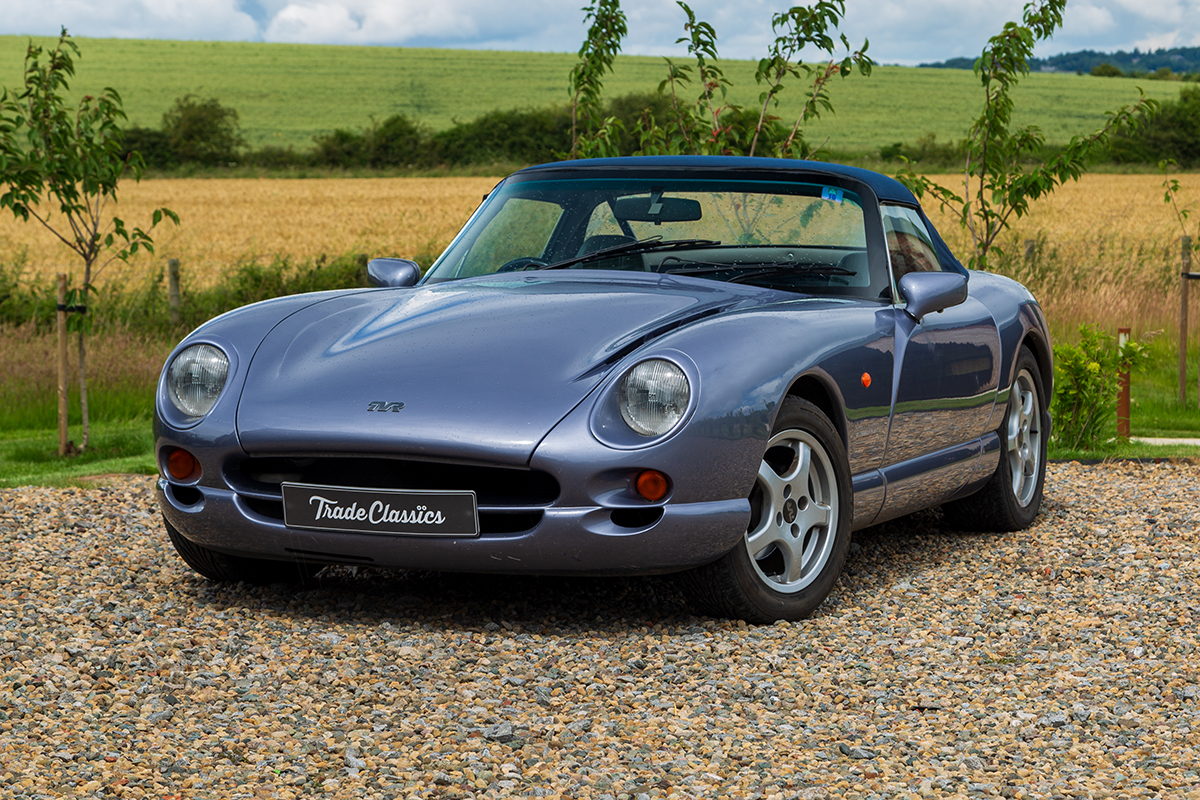
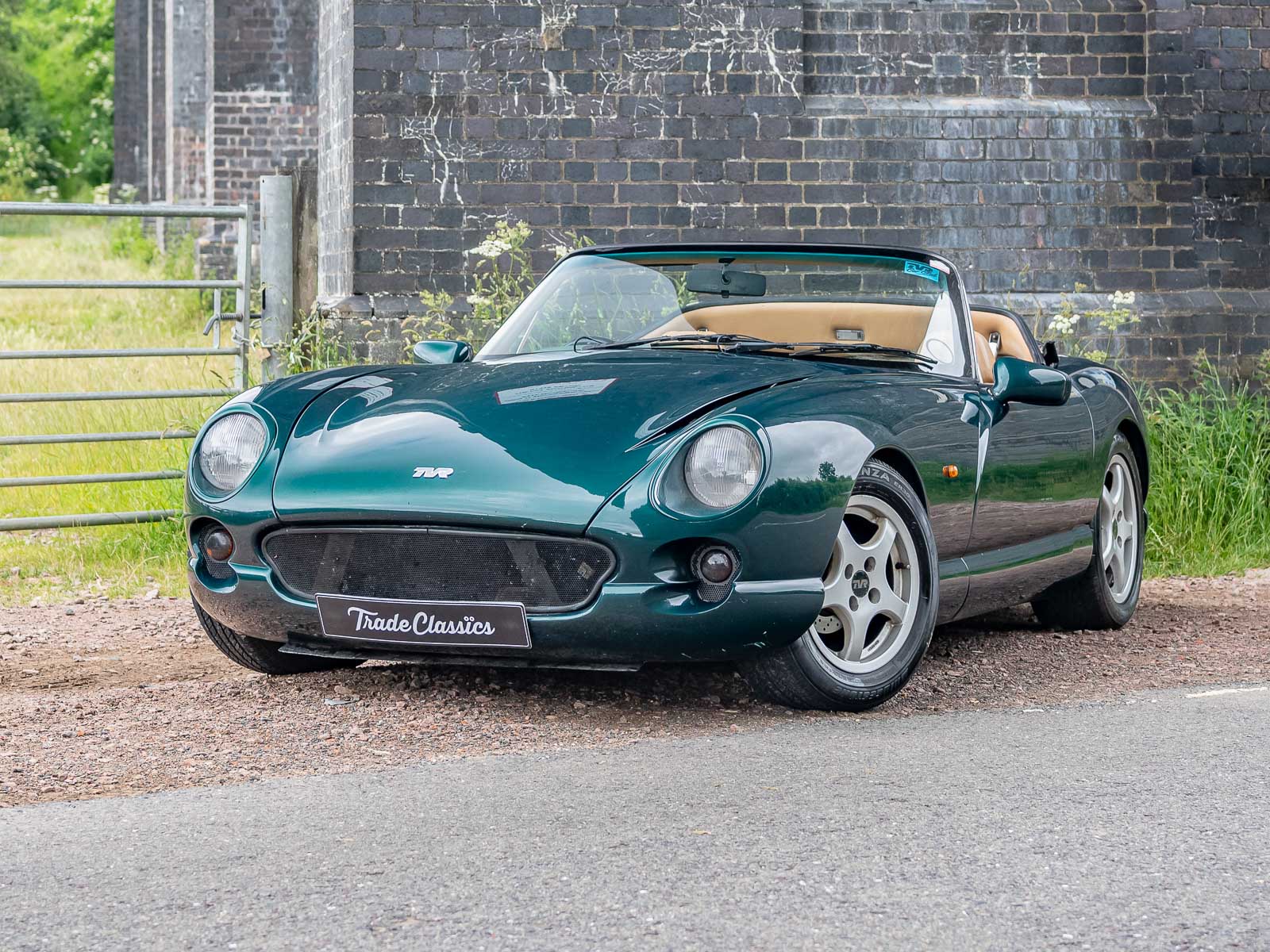
In 2004 the Tuscan MkII was unveiled, with the option of a targa top (like the MkI), or a full convertible roof. This extensively overhauled car also had marginally less exotic (and, for those with Trypophobia, much less terrifying) styling – with a more conventional grill and flush-fit headlight arrangement at the front complemented by more traditional light units at the rear.
As we’ve already mentioned the steering ratio was reduced, albeit only to a marginal degree. But! And this is the key thing, echoed throughout this car: this remains an excellent setup, clearly optimised for driving feel yet not overly heavy, that will make drivers of most steering systems this side of Lotus weep with envy.
Inside, the changes were more significant: TVR even went as far as labelling many of the buttons. The dashboard is bulked up somewhat relative to the Mk1, the window switches are now proper buttons (woohoo!), and the steering wheel gains a couple of buttons. But the attention to detail is still there in force, as is the sometimes-bizarre combination of luxury and rawness. There’s a nice leather/leatherette dash with contrasting stitching – yet there’s still no airbag. There’s plush carpet and beautiful, silky aluminium adorns all touchpoints – yet there’s a raw aluminium pedal box and minimal sound deadening. Bizarre, yes, but somehow it’s never incongruous. It just works, stylistically, by being unapologetically brash and interesting.

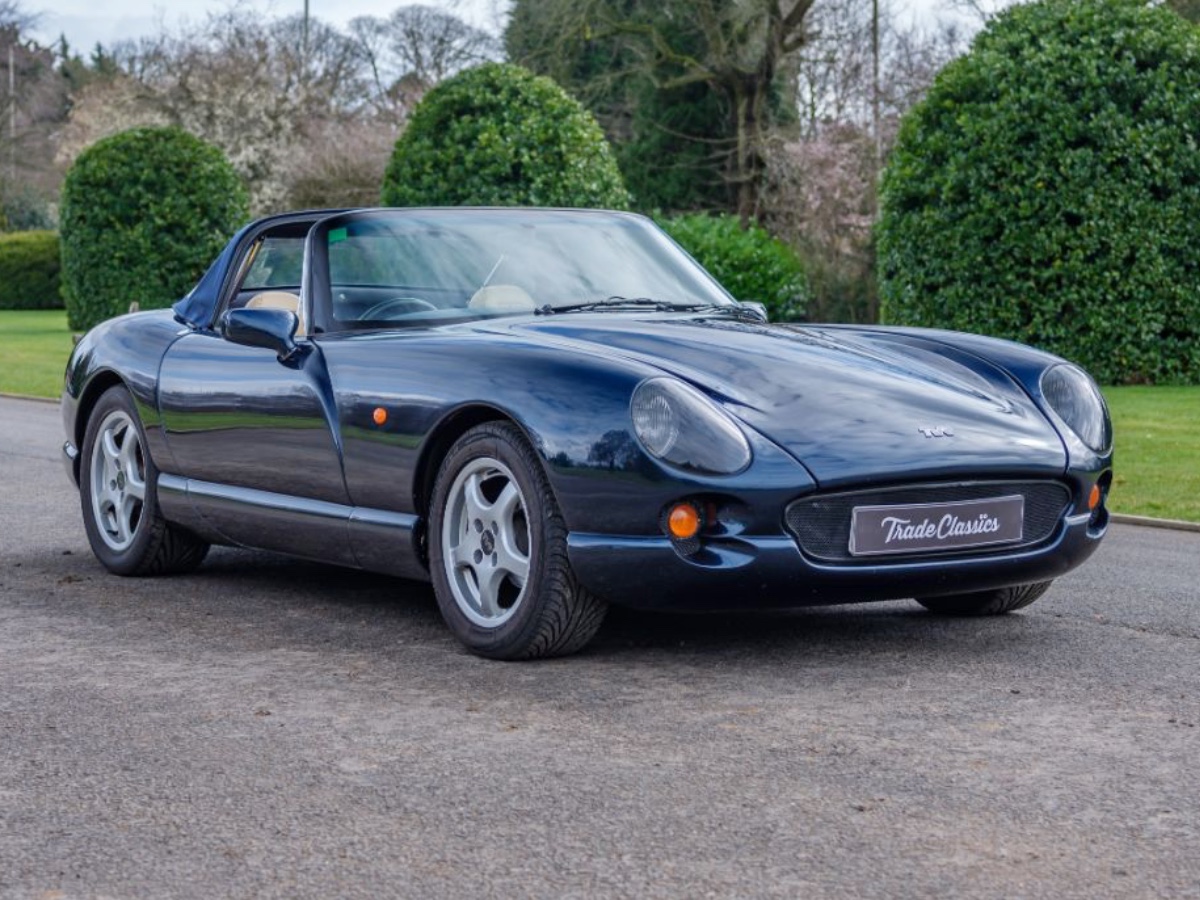
The Tuscan really pushed the boat out on weird. With its sealed bonnet (seriously: it’s bolted down), Spectraflair paint option (think John Travolta’s character in Swordfish), electric door openers hidden in the mirrors, and its organic, alien design aesthetic, there’s really nothing else like it.
Inside, the ability to use the car is hindered by a complete lack of labelling on any of the gorgeous, gold anodised aluminium buttons, knobs, and levers. It also has shift lights mounted over a gorgeous digital/analogue dash, and floor mounted pedals – with no rubber, so good luck using the car in the rain, or after you’ve got any oil on your shoes while you stood on a forecourt filling it with petrol. Which you need to do rather a lot.
Now being quirky isn’t always optimal. Instead of installing a simple push/pull window switch like, oh I don’t know, EVERY OTHER CAR SINCE THE 90s, TVR decided that twisting a wheel offered the best experience. They were objectively wrong.
I recently had to replace the offside side window sensor on mine because the window refused to close beyond half way – not ideal. The benefit of this, on top of being able to actually seal the car again, is that the window motion is now slightly more predictable. Previously the number of turns of the “window wheel” bore absolutely no relation to how much the window would actually move. Now it has what I would classify as “some relation”. Which, for a Tuscan, is about all one can hope for.
It does, however, have a massive boot, which is nice. In other nods to practicality, it also has a bizarre, spherical ashtray. Most interestingly, and this is not something I’ve seen in any other car, it employs two air vents inside the arc of the steering wheel radius to cool the driver’s face. The targa top is also easy to use and stows away nicely in the massive boot. The slight drawback is that it’s about 1cm narrower than the boot opening, so avoiding chipping the paint requires the same level of planning and dexterity as trying to break into he Louvre. The rear window is also removable, and as with the roof off it shakes alarmingly above 60mph it should really be removed and stowed in the boot for high-speed, roofless motoring.
Oh, and the carpet dyes fade. Some believe they aren’t fixed properly to resist UV light. This is problematic on a car that one would really only want to use in the dry given the lack of traction control & airbags and the incredible amounts of torque on offer. Rumours on various forums claim that it’s not a UV problem, it’s a heat problem. The jury is out.
Otherwise, provided you don’t actually fill the fuel tank (but who would ever want to do that, huh?) and flood the carbon canisters (ask me how I know this is a problem) it’s actually a surprisingly reliable car.

Once you’ve recovered from the visual assault, prepare for the aural one. The engine sounds like a bag of angry spanners after their team lost at spannerball (Sorry. It’s late and I’m tired). As one of our sellers said:“Honestly, every time I start it up I wonder at the cacophony of weird and unexplainable noises at idle. However, once you get the revs up, it howls in a gloriously melodic way.”
As mentioned, there are no driver aids. As a driver, you provide all the finesse required through judicious use of the fantastically long travel on the throttle pedal. Whilst it’s not hard to get the back end to break away, you have to be very careless to let it go all the way.
On the other hand, finesse is also required to manage the aggressively short travel on the minimally-assisted brake pedal and highly geared, unassisted steering. One can’t help but feel that this is driving as driving should be.
On the road it’s stiff, possibly too stiff for the UK’s awful network, but it does remain fairly composed, and rewards effort and ground clearance is surprisingly generous: “I’ve not grounded out on a single speedbump, though I do have all new coilovers and bushes, so mine won’t have sagged at all with time”. It’s also easy to place accurately due to its diminutive stature and excellent forward visibility over that curvaceous bonnet. Despite that, it’s not a car that most people can get away with jumping in and driving hard straight away. The power can be frustratingly difficult to access in the wet, but in the dry the handling under acceleration is surprisingly progressive – right up until it’s not. Drivers should be aware that they either gently accelerate around other cars to overtake, or make damned sure the front wheels are fully straight before flooring it. Flooring it as you pull out reminds one of just how much the traction control achieves in more modern cars!
“At the end of the day, I always smile when I walk up to it. I often giggle when I start it. I feel confident and part of the machine when I drive it, and I can’t help but look over my shoulder, grinning, as I walk away from it. The only thing I don’t enjoy is putting it away!”
What more could one ask of a car?






© Trade Classics Limited - All Rights Reserved | UK Registered 11493868 | VAT 302 5584 26